
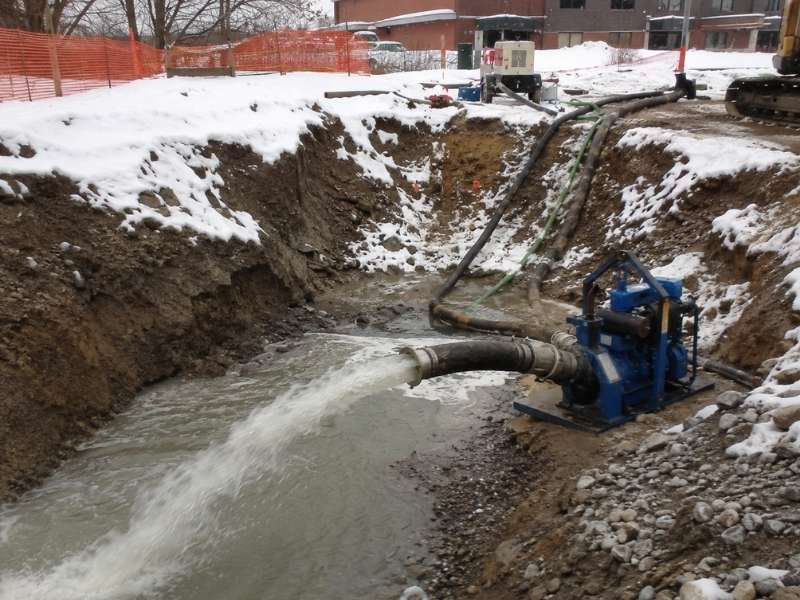
Digging below the water table means pumping groundwater out so crews can work in a dry hole. In warm months that water usually soaks back into the soil or runs off to a nearby low spot. Winter changes the rules. Once the ground freezes, the same plan can stop working, and the pumped water has nowhere good to go. A professional engineer reviews the cold-weather version of a dewatering discharge plan to catch these problems before a pump ever turns on.
Why Frozen Ground Redraws the Discharge Route
Frozen soil acts like a lid. Water that would sink into the dirt in July just sits on top in January. A plan drawn up for warm weather often points the discharge toward a grassy area or a swale that soaks water in slowly. When frost seals those spots, that idea falls apart. The professional engineer looks again at where the water can really go once the top layer of soil is frozen hard. That might mean piping it farther, sending it to a different outlet, or holding it in a tank for a controlled release. The review matches the route to the ground as it is in winter, not as it looked on a mild fall day.
The Freeze Points a PE Hunts For in the Plan
A dewatering line has a few weak spots where ice forms first. The engineer goes through the plan looking for each one. Pump housings can freeze when flow stops. Exposed hoses and pipes lose heat fast in the wind. Valves and fittings hold small pockets of water that turn to ice overnight. The outfall, where the water leaves the pipe, can grow an ice collar that slowly chokes the flow.
The reviewer wants steady movement through the whole line. Water that keeps moving is much harder to freeze than water sitting still. So the plan should show insulation on exposed runs, heat tape where it is needed, and a way to keep at least a trickle going on the coldest nights. A plan that assumes the line stays open on its own will not pass a careful winter review.
Sediment Treatment That Still Works Below Freezing
Groundwater pumped out of a hole is usually cloudy with silt and clay. It has to be cleaned before it leaves the site, and that gets harder in the cold. Settling basins work by slowing water down so dirt drops to the bottom. When the top of a basin ices over, water underneath can slip out before the silt settles. Filter bags stiffen and clog faster, and the products used to clump fine particles together can act differently near freezing.
The professional engineer checks that the cleaning steps still hit the clarity the permit calls for when it is cold. That might mean covering or insulating a basin, adding a filter stage, or picking products rated for low temperatures. The review confirms the treatment holds up in the field during a cold snap, not only on the drawing.
The Refreeze Hazard on Roads and Walkways
Clean discharge water still causes trouble if it runs across the wrong surface. Water that crosses a road, a driveway, or a sidewalk can freeze into a smooth sheet of ice within minutes. That turns a groundwater fix into a fall risk for drivers and people on foot. It also puts the owner on the hook if someone gets hurt.
The engineer traces the full path the water takes after it leaves the pipe. The goal is to keep it off surfaces where people walk and drive, and to send it somewhere it can drain without pooling and refreezing. Sometimes that means a longer line or a different release point. A plan that dumps water near a busy walkway in freezing weather is a problem waiting to happen.
Pump Redundancy and Standby Power for Sub-Zero Days
Pumps fail at the worst times. A cold night, a snowstorm, or a power outage is when a dewatering system is most likely to quit, and also when a frozen line does the most damage. If the main pump stops, water stops moving, and a still line in sub-zero air can freeze fast.
A good winter plan builds in backup. That means a second pump ready to take over, standby power such as a generator, and a set minimum flow to keep water moving through the coldest hours. The professional engineer checks that these backups are real and sized for the job, not just a note on the page. The review looks hard at what happens during a failure, because that is the moment the plan has to hold.
A winter discharge plan is a warm-weather plan tested against frost, ice, and long cold nights. The stamp from a professional engineer says a licensed person looked at the route, the freeze points, the sediment treatment, the refreeze risk, and the backups as one system. That is what keeps a simple pumping job from turning into a flooded hole or an icy road.
Frequently Asked Questions
Does a winter dewatering discharge plan need a different permit than a summer one?
Usually the discharge permit is the same one that applies all year. What changes in winter is the set of conditions you have to meet under frost and ice. Cold weather can make it harder to hit the clarity limits and monitoring steps the permit already calls for. So the plan does not need a new permit, but it does need extra care to keep meeting the one you have.
What happens if the discharge line freezes overnight?
When a line freezes, the water has nowhere to go, and the pump can keep pushing against a solid plug. That can dead-head the pump, back water up, and cause an overflow at the pump or the hole. In cold air the trouble spreads as more of the line ices up. This is why steady flow, insulation, and heat protection are built into the plan from the start.
Can you discharge dewatering water onto frozen ground or into a storm drain in the cold?
Frozen ground will not soak water in, so pumping onto it just makes runoff or a sheet of ice. Storm drains have their own capacity limits and rules about what can go into them. Neither one is a safe default in winter. The engineer checks each possible outlet against the ground conditions and the permit before it goes in the plan.