
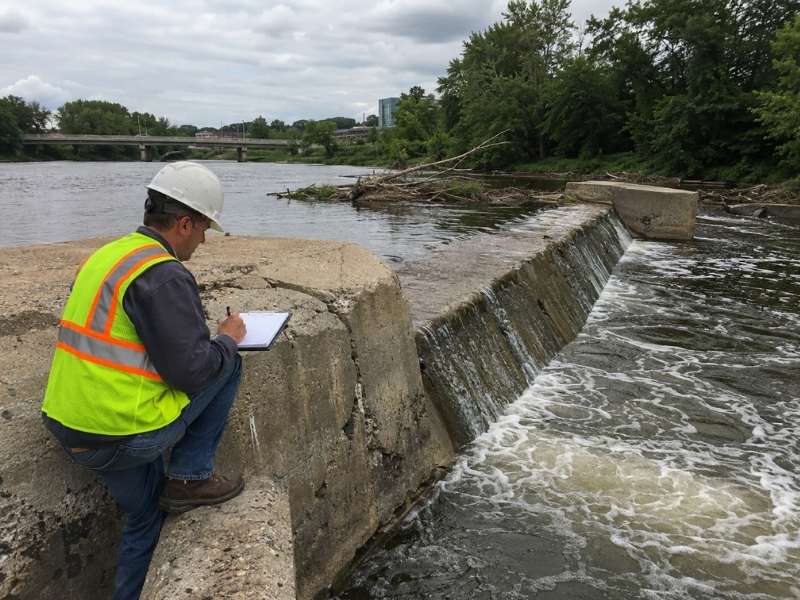
Grand Rapids has spent years reshaping a stretch of the Grand River. The current Lower Reach work involves four low-head dams and a set of new river features. Projects like this move through heavy planning, environmental review, engineering, and permitting long before any equipment shows up. City and NRCS records show how much study happens first.
When an existing water-control structure gets changed or taken out, the record of what it looked like beforehand carries real weight. A dam inspection is one way to capture that record while the structure is still there to see. This article covers why that record is worth having, and what a low-head dam inspection can and cannot tell you.
What the Structure Reveals Before the River Changes
A dam inspection records what an existing structure looks like while crews can still reach it. Once removal starts, a lot of that view disappears fast. The window before construction is a good time to capture the current shape of the dam.
An engineer walking a low-head dam may note visible wear on the concrete. Cracks, spalling, and chipped edges get photographed and written down. Exposed rebar, worn joints, or an odd bulge in the face are all worth recording. The idea is to capture the structure as it sits today, not as the original drawings show it.
There’s no single checklist that fits every dam. The scope depends on the structure, the project, the owner, the engineer, and the rules that apply. A short review for a small barrier looks different from a detailed one tied to a larger job. What stays constant is the goal of a clear, honest record of current conditions.
Reading the Dam in Its Existing Condition
Reading a dam in place is partly about telling old work from new. Many low-head dams have been patched, capped, or altered over the decades. An added concrete cap, a newer wingwall, or a repaired section tells part of the structure’s history. Sorting original construction from later changes helps the team understand what they’re really dealing with.
From there, the engineer notes the defects that can be seen. Surface cracks, missing chunks of concrete, rust stains, and shifted sections get written down with photos. Some spots may need a closer look than a walkover allows. Flagging those areas early is more useful than pretending a quick visual answers everything.
Part of the value here is timing. Some conditions vanish the moment removal begins. A record made while the structure is whole gives the project a baseline that later work can be checked against. That baseline becomes part of the permanent project record.
Where Inspection Meets Removal-Phase Planning
This is where the record starts to earn its keep. Before anyone alters a dam, the design and construction team needs a clear picture of what they’ll meet on site. A dam inspection feeds that picture.
Access is one of the first questions. Crews need a safe way to reach the structure, and they need to know which bank works best. Equipment needs room, and the work may depend on water levels and temporary conditions. Notes on access help the team plan the order of work.
The inspection can also flag spots that need more study before removal. Maybe a section looks unstable. Maybe an old repair hides what sits underneath. Those flags tell the team where added investigation might pay off. None of this decides the removal method on its own, since that call rests with the engineers and the full project design, using the inspection as one input among many.
The Conditions Beneath and Beside the Concrete
A low-head dam is more than the concrete you can see. What sits around it and under it often matters just as much. A careful inspection looks upstream, downstream, and off to the sides.
Abutments, the points where the dam meets the banks, are worth close attention. Signs of scour or erosion near the base can hint at how the river has been working on the structure. Exposed riverbed, undercut edges, and washed-out material get noted where they can be seen. Roads, pipes, or nearby structures may also sit close enough to matter during removal.
A visual inspection has a real limit. It only covers what a person can actually see and reach. Anything hidden by water, sediment, or the structure itself can’t be confirmed by looking. When the project needs to know about those hidden conditions, that usually calls for added investigation beyond a standard visual review.
Turning an Inspection Record Into a Removal Baseline
Once the field work is done, the pieces come together into a record. Photos show the structure from several angles. Field notes describe what the engineer saw. Measurements get added where they help, along with any existing drawings the owner already has.
Good condition notes do two jobs. They describe the dam as it stood, and they list the items that still need a closer look. That second part matters, because it tells future readers what the visual review did not settle. A record like this holds up better if questions come up later.
The Grand River work is a fair example of the setting where this practice fits. As the Lower Reach moves through active in-river construction, keeping a clear record of existing conditions is sound engineering for any job that changes major river structures. The current project includes removal of four low-head dams and installation of new river features. A solid inspection record gives that kind of work a reliable starting point.